Spring and resurrection as images of renewal
The PeasantsSpring and resurrection as images of renewal join the turning of the natural year to the Christian promise of new life. Their force lies in both likeness and contrast: fields, birds, and water announce an abundant awakening, while the Easter service gives that awakening spiritual and communal form. Yet renewal does not arrive evenly. With the men imprisoned and the fields of Lipce left empty, the season’s promise exposes how much human labor and suffering stand between the earth’s readiness and a village’s recovery.
The earth’s seasonal return
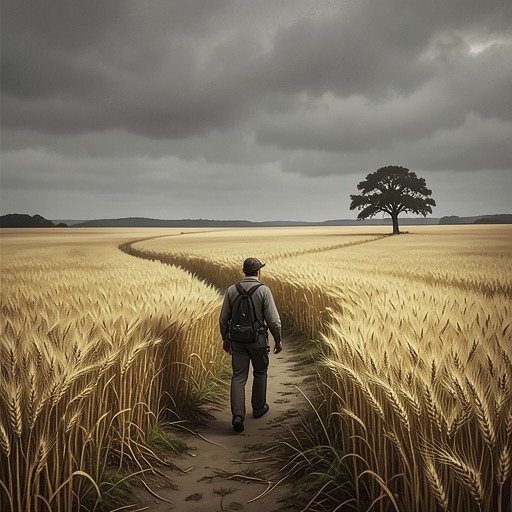
Spring arrives first as a material change in the landscape. Birds head back to their old nests; higher fields dry, waters subside, and the soil seems to ask for ploughing, manure, and grain. The description makes the land more than a passive backdrop: it is ready for work and sustenance, but its readiness depends on people who can answer it. The earth’s renewed fertility is an invitation, not a harvest already secured.
The signs of growth gather across the countryside. Grass and winter wheat push up; Skylarks sound above the fields, storks wade through the meadows, and flowers spread along the marshes. The sky seems to open farther as the winter mists recede, and the whole world appears to stretch awake. This abundance has a practical rhythm as well as a lyrical one: elsewhere, people plough, horses and carts move across the land, and work continues through changing weather. Nature’s renewal and human labor are presented together, each giving meaning to the other.
That conjunction sharpens the account of Lipce. The villagers’ familiar hardships—hunger, illness, quarrels, and death—are not described as new; what makes this spring especially grievous is that the ground lies fallow because there is no one to till it. The working men are in prison, while the women carry an exhausting range of duties: tending livestock, preparing gardens, handling household work, and caring for children, alongside the work in the fields. The season’s fertility therefore becomes a measure of deprivation. The earth is ready, but the community lacks the hands needed to make readiness fruitful.
Resurrection in the church
The Easter service translates spring’s awakening into a religious image. Before the sermon, the congregation kneels packed closely together, and the light catches their eyes as they rise toward the altar and the figure of the wounded, resurrected Christ. A sudden silence is compared to a spring noon in the fields: the wind has dropped, wheat ears move together, and Skylarks sing high above. The comparison brings landscape into the church, making the stillness of prayer part of the same seasonal world as the fields.
The Parish Priest of Lipce recounts the Passion and speaks of suffering, injustice, and the poor. His sermon first turns the congregation toward guilt: human sins and grudges are described as renewing Christ’s torment. The people answer with sobbing and cries. Then the sermon turns toward the Resurrection, presenting it as a spring morning granted again and again, and as a promise that injustice and suffering will finally end. Its hope extends beyond the season’s return: the promised judgment will put down the haughty, punish sin, and bring the just into eternal glory.
The movement from lament to gladness becomes collective and ceremonial. After the hymn of the Resurrection, the organ sounds and the bells ring; the congregation follows the priest carrying the monstrance through the church amid incense, lights, and song. The crowd moves as one body, compared to a human forest swaying together. In this scene, renewal is not only a belief held by individuals. It becomes a shared act: grief gives way to a procession in which voices and movement make the promise of life publicly present.
Renewal under the shadow of imprisonment
The congregation’s shared celebration does not erase Lipce’s particular pain. When the sermon turns to the promise of justice, the Lipce women tremble with grief over the injuries they have suffered; they cry out and prostrate themselves, while others help them up and offer comfort. The priest tells them their punishment will soon be over if they trust in divine mercy, and says the men may return any day. That assurance belongs to the service’s consoling language; it does not itself end the imprisonment or restore the missing labor.
Hanka’s experience gives the divide between sacred renewal and immediate distress a personal form. During the church service, she cannot turn her mind to prayer and shakes with fear, as though still in her father-in-law’s storeroom. The Easter setting surrounds her with the congregation’s prayers and the promise of resurrection, but her attention remains fixed on a frightening circumstance. The scene does not dismiss the ritual’s hope; it shows that hope coexists with fear rather than instantly overcoming it.
The contrast extends into Easter morning. The sun rises over ponds and dew, birds sing, water runs, the forest murmurs, and the wheat ripples beneath the light. The natural world greets the day with the same Alleluia proclaimed by the church. But Lipce has a sadder, quieter Easter than in earlier years. The villagers sleep late, and movement begins only when the sun is already high. At Boryna’s, Hanka rises earlier than the others, wakes Pietrek to harness the horse and britchka, and prepares the blessed food, while Józka washes and dresses the children and Pietrek and Witek wash at the well. The observance continues, but its domestic preparations take place within the altered, subdued life of the village.
A promise, not an automatic restoration
Across these scenes, spring and resurrection echo one another without becoming identical. The return of growth is visible and recurring: water recedes, wheat rises, birds return, and daylight expands. The Resurrection sermon gives that recurrence a spiritual meaning and imagines a final end to injustice. Yet the fallow fields and the imprisoned men show that natural abundance cannot by itself repair human circumstances. The land’s readiness makes absence more stark, while the Easter promise sustains a hope that the present scene cannot yet fulfill.
The imagery therefore holds renewal and interruption together. Spring’s brightness is real, as are the processional song and the congregation’s moment of shared exultation; so too are Lipce’s empty fields, the women’s exhaustion, and Hanka’s fear. Rather than treating the season as a simple guarantee that every hardship will pass, the narrative makes renewal a tension between what the world offers and what people can presently bear or accomplish. The Easter morning arrives, but its promise remains entangled with labor, imprisonment, memory, and the village’s need for justice.